
INTERVIEW: Andrew Gillies |Namibia Horse Safari
The man, the myth, the chaos cowboy: Andrew Gillies. Emma grabbed him on one of our rides to find out what it really takes to run one of the best horse adventures on the planet, Namibia Horse Safari.
He and his crew look after more than 100 horses, many of them schooled and even bred by Andrew. They live as a herd out on the open veld in Namibia and, honestly, their work life balance puts ours to shame. Each horse only goes on safari four times a year and then gets at least a month off to eat, sleep and side eye the others.
Every single time we tack up and tack off, each horse is checked for niggles and stiffness. Something feels off? The horse gets time out and the rider gets a new set of ears. They are fed throughout the day and night, hooves constantly checked, with Nelson and Collen sorting farrier work on the spot.
These breathtaking rides only run from autumn to spring, giving the herd a full four months down time in summer. Thirteen rides, each roughly 300 km of dust, drama and desert beauty. Horses, guests, crew and Namibian terrain that will happily chew you up if you get it wrong. Andrew just smiles and pours another whiskey.
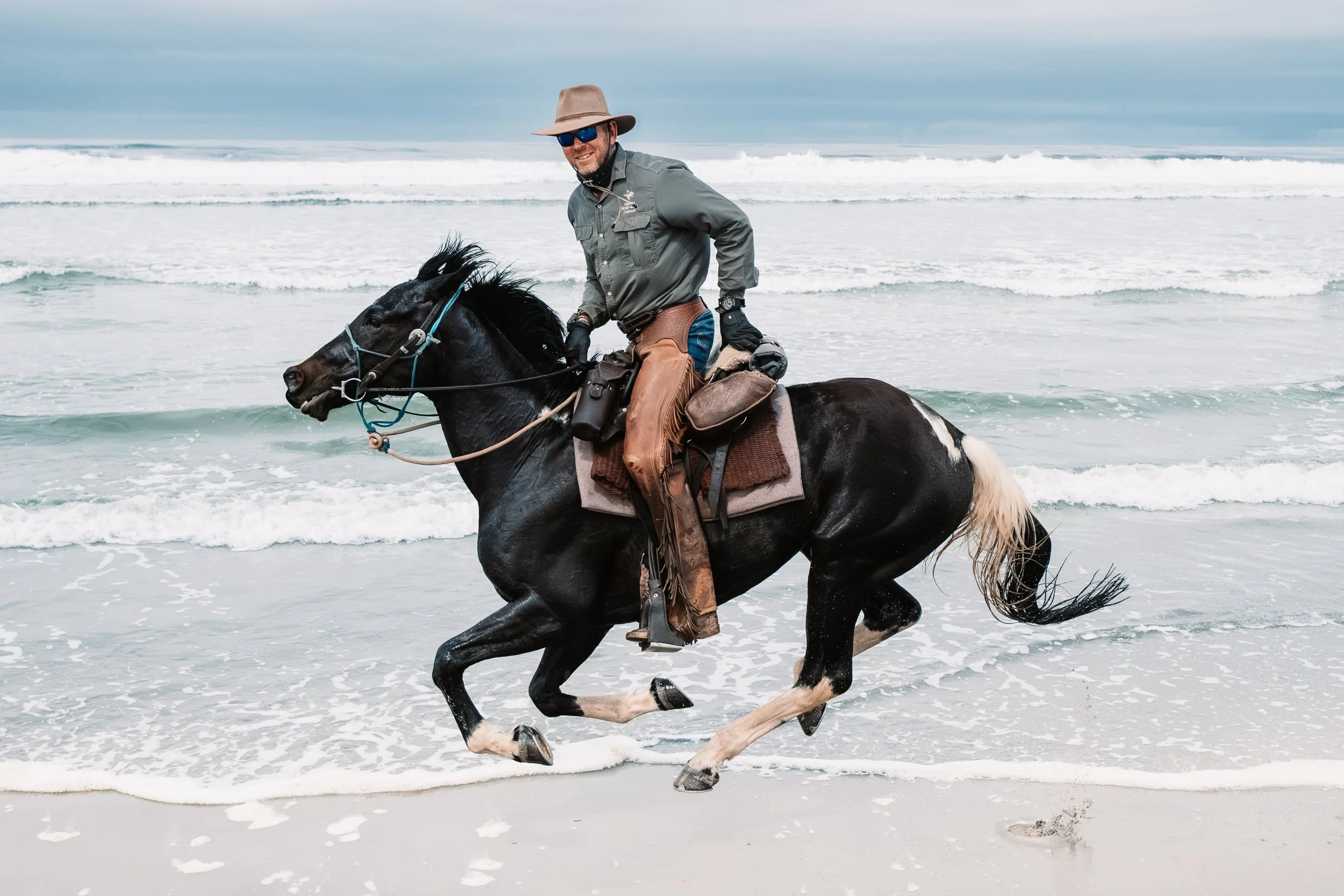
Photo by Emmy Meiklejohn
Interview By Emma Blunt
Emma Blunt (EB): Can you tell us about your journey into the world of horse safaris and how you ended up in Namibia?
Andrew Gillies (AG): I’m a fourth generation southern African, and when I joined the army I landed in the cavalry. We were sent to Namibia to source horses, and I fell head over heels for the country. I returned in 1989 and never left. My path into tourism began after studying Nature Conservation and completing a professional hunting course. I’ve loved horses all my life, my grandfather had me on a saddle before I could walk, and offering horse safaris became the perfect way to combine my two passions.
EB: Tell us a bit about Namibia Horse Safari Company. What do you specialise in and what makes your rides different?
AG: Speed and space define what we do. Our expeditions are around 320 km, completely mobile, and cross the desert in several places. And we like to ride fast.

Photo by Titch Tetley
EB: Tell us about the different safaris you offer.
AG: We offer four rides: the Namib Desert, Wild Horses, Damaraland, and Skeleton Coast. The team and concept stay the same, but each route reveals a different face of Namibia.
EB: What type of rider suits these safaris best?
AG: Riders who are confident in a group, love adventure, and are comfortable across varied terrain and paces. We often get polo players and event riders. What we really offer is freedom, the freedom to open up on huge desert plains.
EB: It truly is a one of a kind ride. With so many options out there, do you have any direct competition?
AG: We all work well together and each operator has their own strengths, whether scenery, wildlife, or culture. We offer a bit of everything, from desert elephants to rhino, lion, and hyena, but the heart of our rides is the pure beauty, the vast space, and the chance to canter in your own bubble.
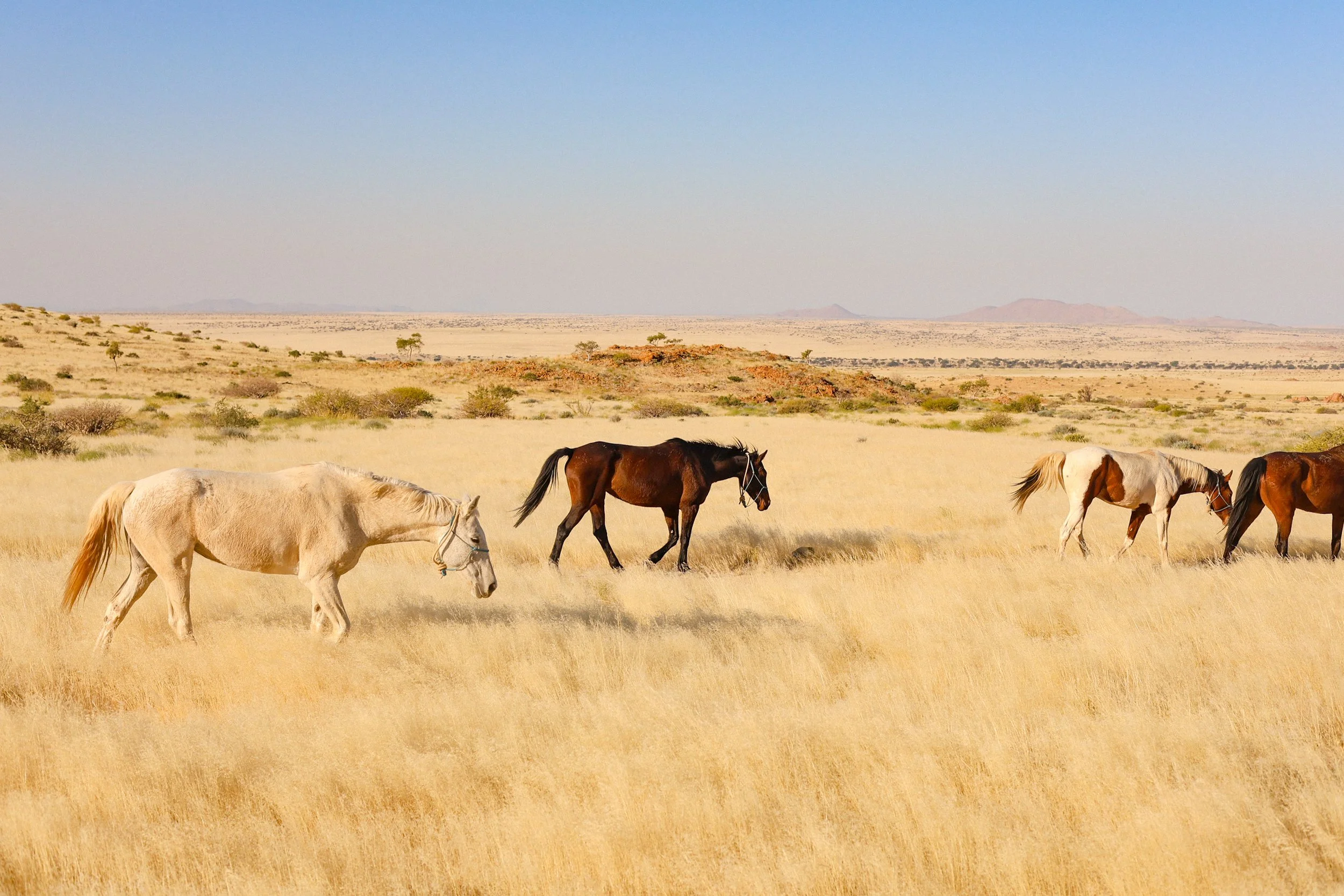
Photo by Alex du Toit
EB: You have over 100 horses, all in incredible condition. Tell us what it takes to look after them.
AG: Everything starts with the horses. Without them, we’re just another safari company. Nutrition is key, so they’re fed four times a day. Every morning we check them for tweaks or twinges, and if one isn’t feeling perfect, they rest.
EB: : You can tell they love their job.
AG: They do. They’re never sour. If anything, they’re unlucky if they work 40 days a year. The rest of the time they’re out in the bush with their mates, living like a wild herd.
EB: Walk us through a day in your life while on safari.
AG: We wake up an hour before breakfast, at the moment 06:00. The horses are fed, then we pack up bedrolls and ablutions, and attempt to look presentable, which takes longer these days. Then we do water rounds and check each horse for niggles. After breakfast we saddle up for a 20 to 25 km morning ride. We break for lunch so riders can rest and the horses can eat.
In the evening we reach camp where the horses are fed, groomed, checked for rubs, and doctored if needed. Then it’s time for a well deserved drink, dinner from our incredible chef Willie, and stories around the fire.
EB: What makes you so passionate about this life?
AG: This is my life. If you love adventure, the outdoors, and travelling on horseback, this is the ultimate combination. It’s freedom. These aren’t tourist horses that plod nose to tail, they’re proper riding horses. To explore the desert, you need a fit, capable horse. What’s not to love?
EB: How long have you been guiding and what stands out as a favourite memory?
AG: I started guiding in 1989. There are so many moments. Seeing desert black rhino in their natural habitat is something special. And watching desert elephants up close, sometimes just 15 metres away as they lie down for a dust bath, Damaraland is full of magic like that.
EB: Top tips for anyone looking for a horse riding safari in Africa?
AG: Choose a ride that suits your level and matches what you want to experience. The last thing you want is to feel out of your depth. If you want big game and luxury, head to Botswana or Kenya. If you want speed, space, adventure, and you’re fit, then Namibia is the place to be.
LEVEL: Advanced & fighting fit. You need to love leaving your comfort zone and cracking your soul wide open. Not for happy hackers, but for riders who grin when the pace lifts, the terrain gets real and the days in the saddle are long.
BOOK NOW: These rides book out fast. Fill out the Namibia Horse Safari enquiry form .
OR if you are not sure this ride is for you 👉 Message us on WhatsApp
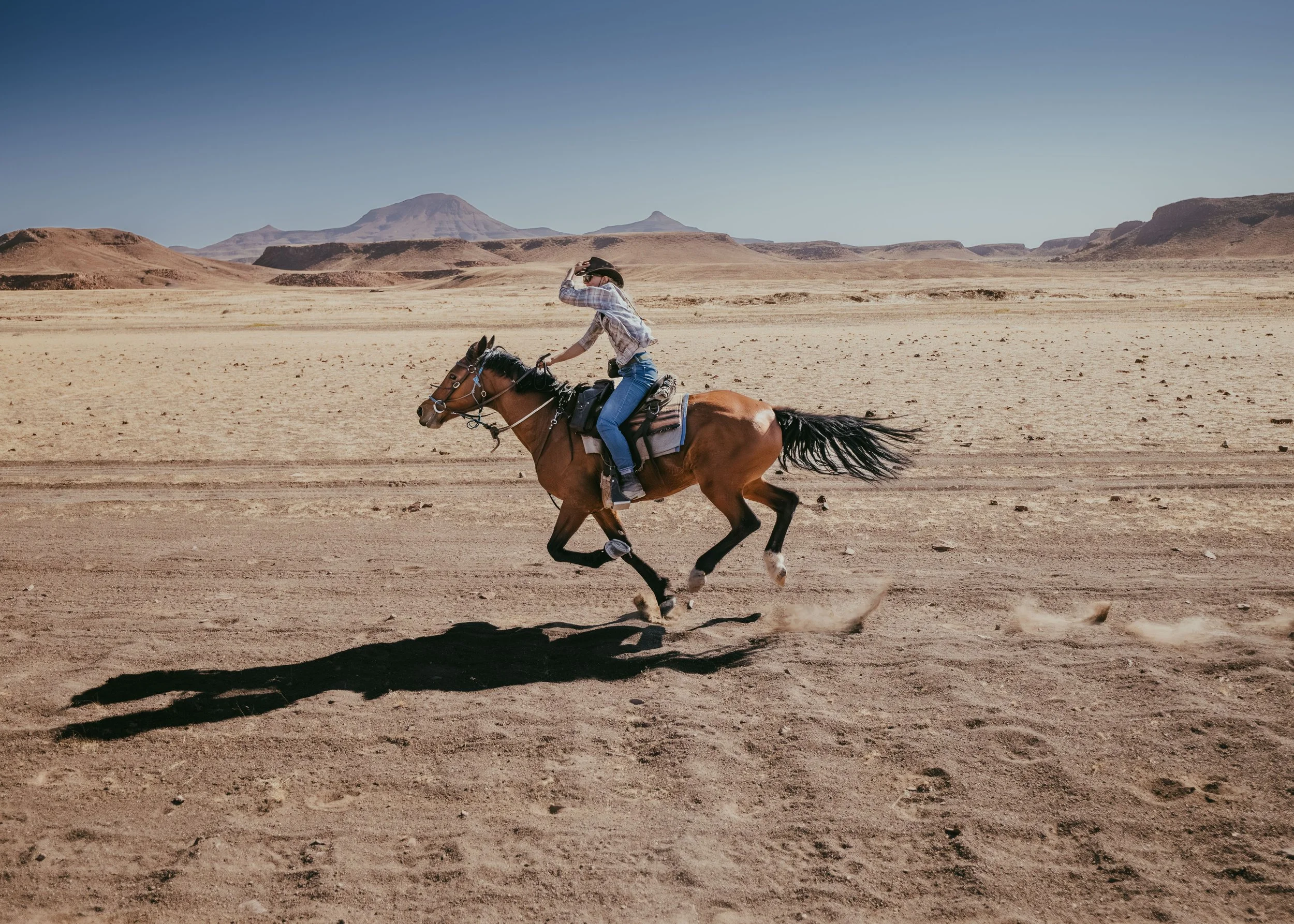
Photo by Emmy Meiklejohn