Argentina: Where "It Doesn't Matter" Is Actually Sound Life Advice
By Karen Bridges
Arriving in Patagonia: A Masterclass in Argentine Optimism
Landing in Esquel, Argentina, was the kind of exhilarating that makes you reassess your life choices mid-descent. The entire plane erupted in deafening cheers and applause as we taxied toward a tiny terminal, where families were enthusiastically waving handmade signs for loved ones like we'd just returned from the moon.
I assumed this meant I should be grateful to be alive.
As I was to learn, landings in Argentina often involve vocal appreciation. Massive bumps, cross winds, a gentle touchdown in sunny Buenos Aires at the end of our trip – it didn’t matter. Clapping and cheers. It's delightful and unnerving in equal measure, like being part of a very enthusiastic support group you didn't know you'd joined.
Meet the Destroyer
Our exceptionally competent driver Federico met our group of five (three solo women and one delightful Australian honeymoon couple) in "the Destroyer." The humble Hyundai passenger van hadn't yet earned this nickname, but would over the next few hours of scraping, bumping, jaw-rattling mayhem through remote northern Patagonia. Like the hardy Criollo horses beloved in Argentina for their mountain savvy and stamina (and despite, or perhaps because of, its Korean roots), the Destroyer powered us through to our destination, eventually.
Destroyer required just one strategic application of duct tape (or was it bailing twine?) to hold the front bumper together. Welcome to Argentina.
First Night: We Eat When?
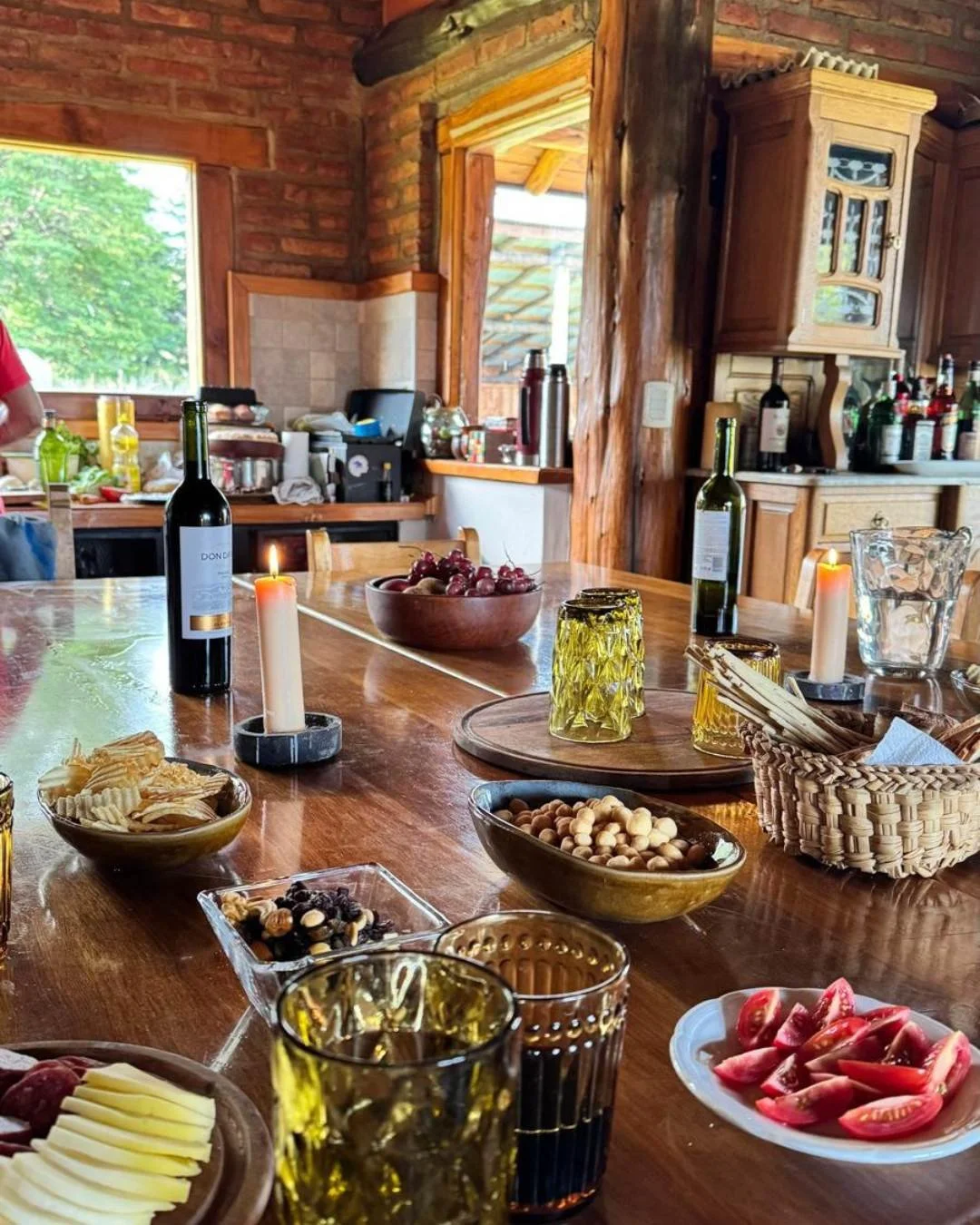
We arrived at sunset to our little estancia - a cozy, off-grid cabin tucked under the mountains with stunning views, a hot shower, warm hospitality, and the deepening realization that Argentines eat late. Really late … is it actually 10 pm? My sad little airport sandwich seemed very far away and very, very small. But our fabulous chef, David, avid fly fisherman and Argentine outdoorsman extraordinaire, did not disappoint. Fresh trout (caught by him, naturally), vegetables, potatoes, all prepared over an open fire.
Heaven arrived around 11 pm in the form of dessert, which I barely remember eating but am certain was amazing.
Bed was calling. The horses and gauchos would have to wait until morning.
Café Con Leche Caliente. Muy Bueno.
Day one: our first morning introduced me to one of my favorite things about Argentina: hot milk in my coffee? Yes, please! It was a cold, wet day outside and our hosts estimated 8-9 hours to summit a nearby peak and soak in the Patagonia views.
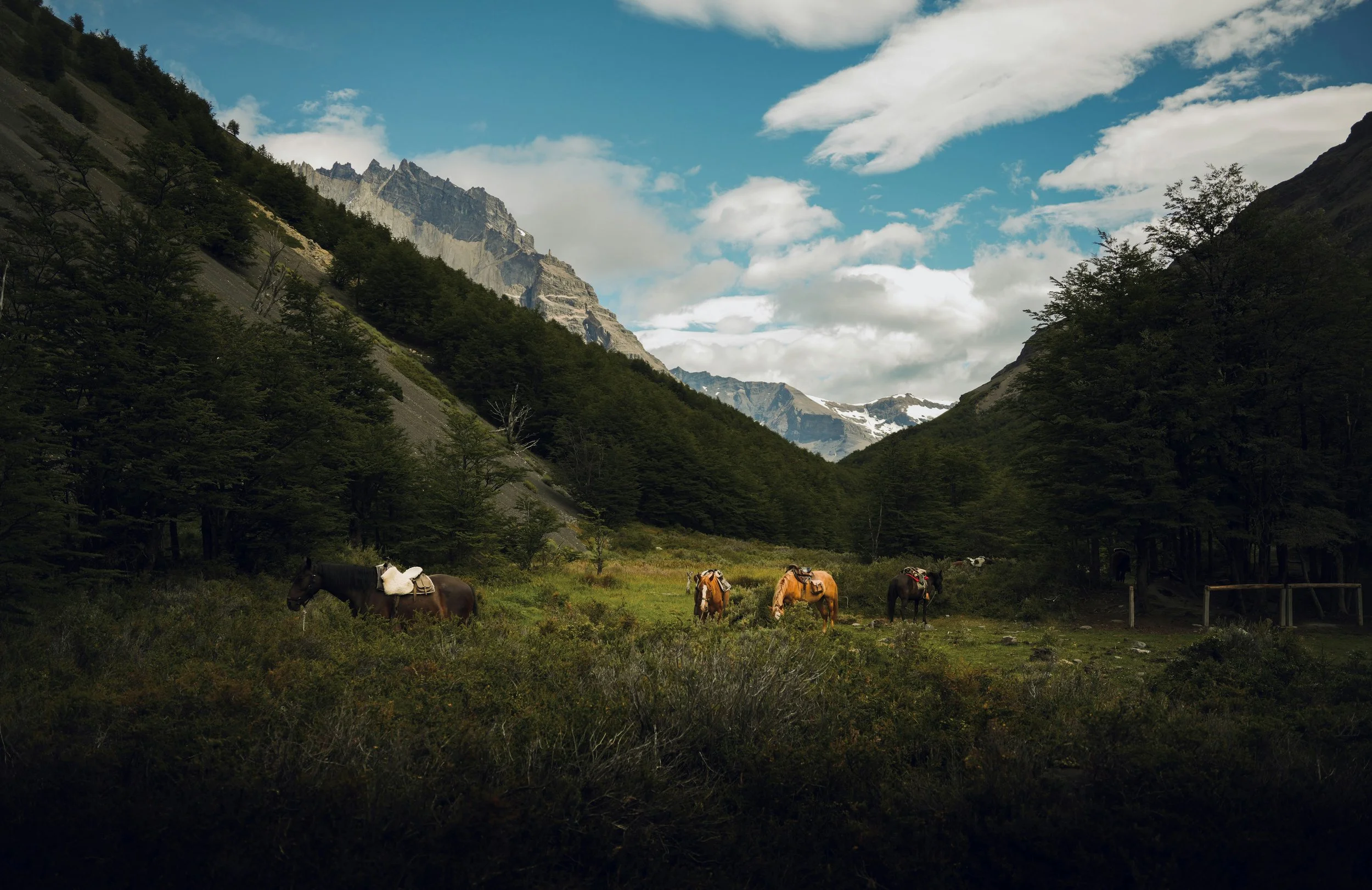
But alas, the rain, fog, and damp had other plans for us. We returned to the estancia for lunch after a very soggy but still beautiful ride through lush forests and grasslands, grand views and one wild canter back to homebase, having learned our first critical lesson:
Pay attention to what the gauchos are wearing.
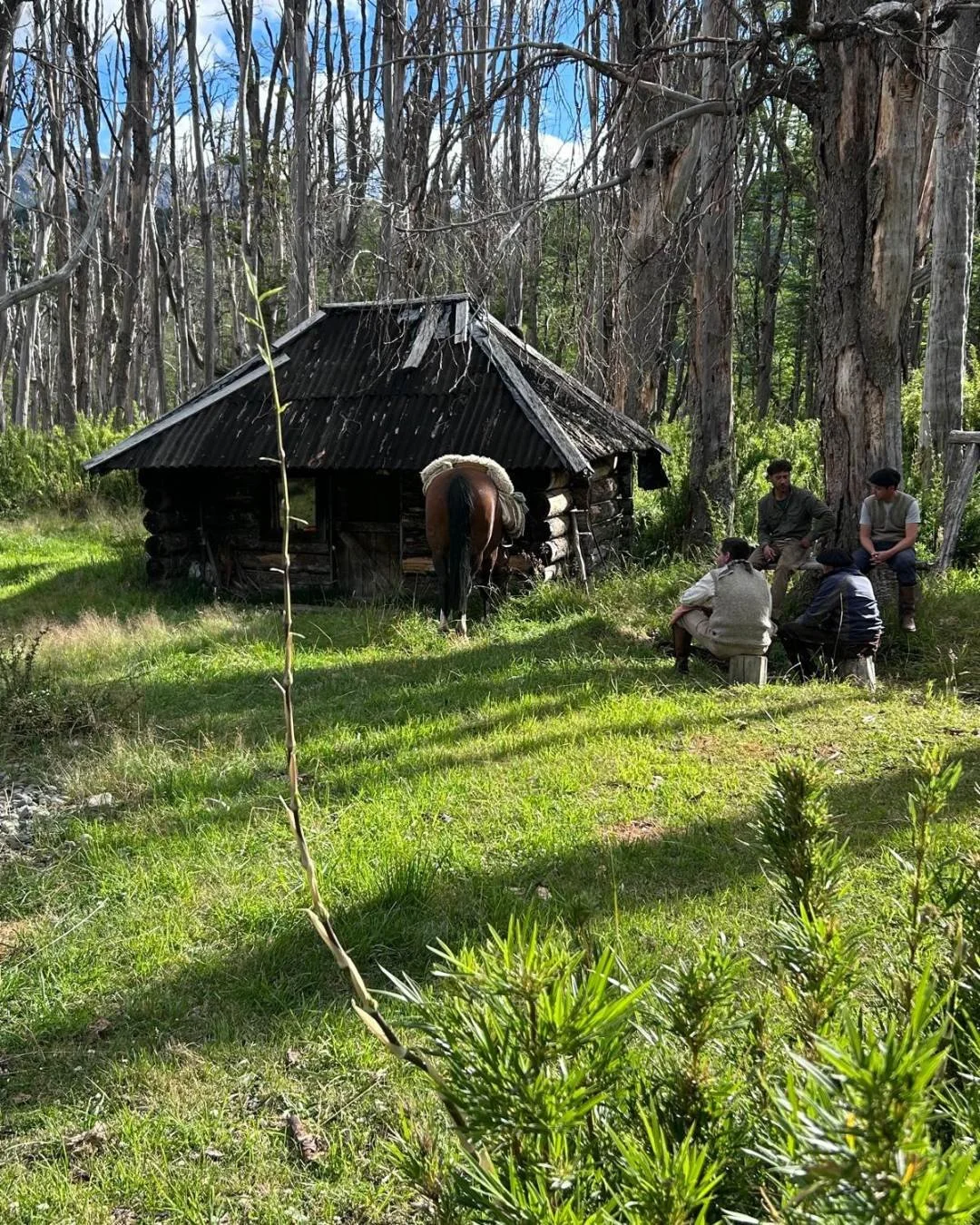
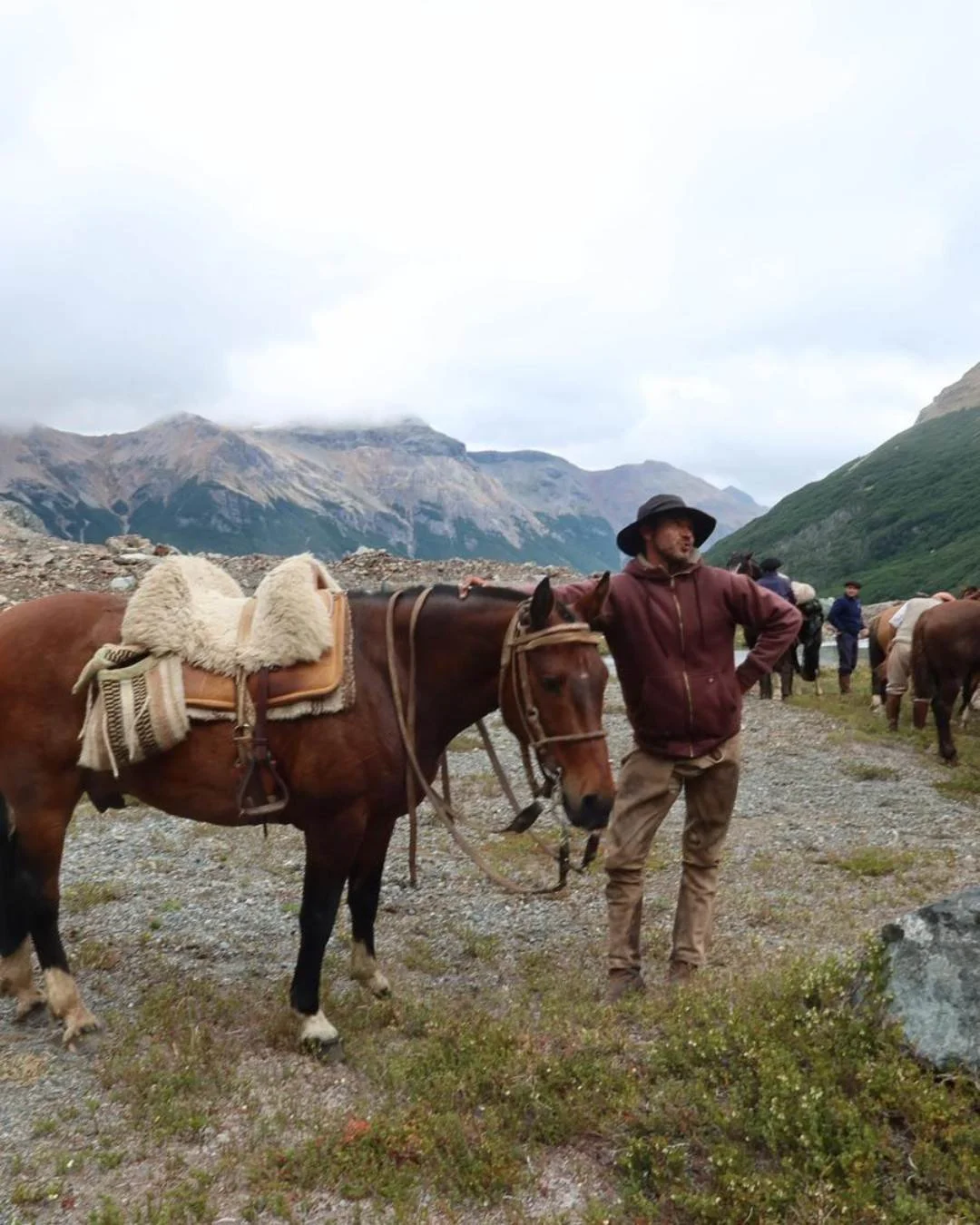
That first day our gauchos sported: rubber boots, full leather chaps, wide-brimmed hats, and waterproof ponchos packed and ready. Argentina really might be the only place you can swirl a poncho on horseback and neither the horses nor the guides so much as flinch.
Meanwhile, our group learned that wool ponchos - no matter how stylish or Instagram-worthy - weigh approximately one thousand pounds when fully wet. Rather like a sheep, I imagine, though I really have no idea how a sheep feels in the rain. Warm, probably. Light and airy? Absolutely not.
Actual Lessons Learned: Mountain Riding in the Rain
Waterproof or water-resistant poncho or long rain jacket, a must.
Something - poncho, jacket, chaps, rain pants, anything - that covers the tops of your boots or half chaps. Otherwise you'll end up with so much water sloshing around your toes that a goldfish could comfortably make a home in there.
No cotton clothing. Only wool or synthetic. Cotton pulls heat from your skin the second your waterproof layer fails. You will get cold, no matter how stylish you once looked.
Dry bag (the kind kayakers use) for your cloth saddlebag. Electronics and spare clothing deserve better than a soggy end.
“Jaketa, Jaketa, Jaketa!!!”
Meet the jaketa (or yaqueta), a large, aggressive horsefly native to Patagonia, with a nasty stinging bite.
For context: our mountain horses were bombproof. Utterly unflappable. The jaketa is apparently the only thing that makes them lose their minds, as the insects will swarm and attack the horses relentlessly, and the horses clearly know this. Our young newlywed, the first to disturb a jaketa nest, sat her spinning horse like a rodeo star while the rest of us realized we'd learned something very new about Patagonia.
"Trot, trot, trot, jaketa, jaketa!!" became our rallying cry for the entire week, the primary strategy for leaving the jaketas behind and avoiding equine fireworks. A fine way to liven up a long trail ride, whether the jaketas were real or simply imagined by gauchos bored with walking. Who knew? And did it really matter?
Chaos and Coke (the sweet kind)
That afternoon, as the rain scrambled our original itinerary, we instead enjoyed a mad dash in the open lands around the estancia, through trees, brush, dodging fences, cantering downhill at increasing speeds, our lead gaucho Manu wielding his facón(traditional knife) to bushwhack with abandon. I later discovered a huge divot in the toe of my boot. No idea where it came from.
My horse that day was Fernet, named I was told, after an Italian herbal liqueur that is very popular in Argentina. My inability to remember my horse's name prompted a late-night group tasting of Fernet and Coke, a common pairing in Argentina, as everyone was intent on helping me improve my memory. This was after we enjoyed the most incredible fire-roasted chicken and veg, abundant red wine (of course), accordion and guitars appearing from somewhere (it was Argentina after all), and the horses grazing peacefully around the estancia, jaketas notwithstanding.
Day Two: Nine Hours of Bushwhacking and Lost Shoes
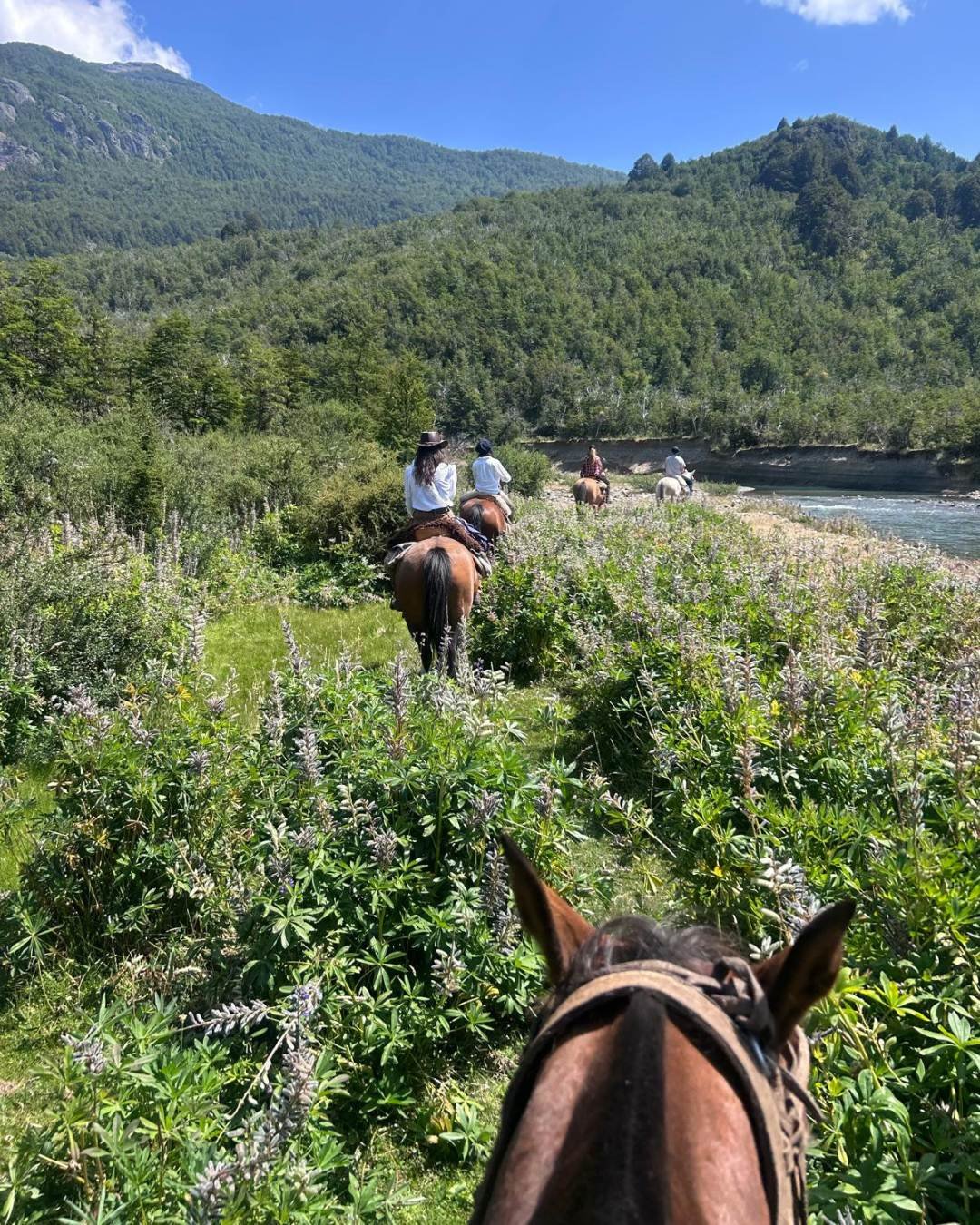
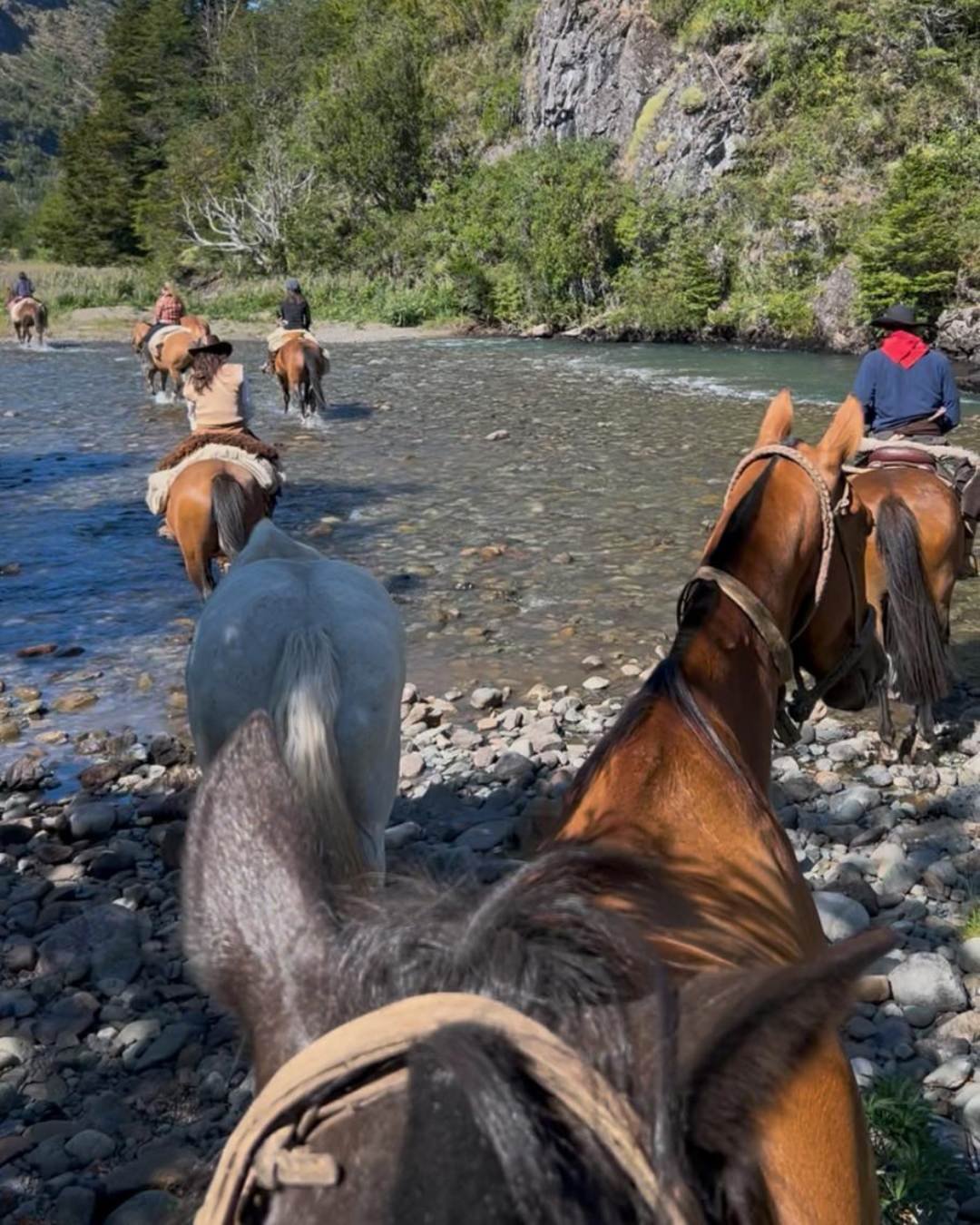
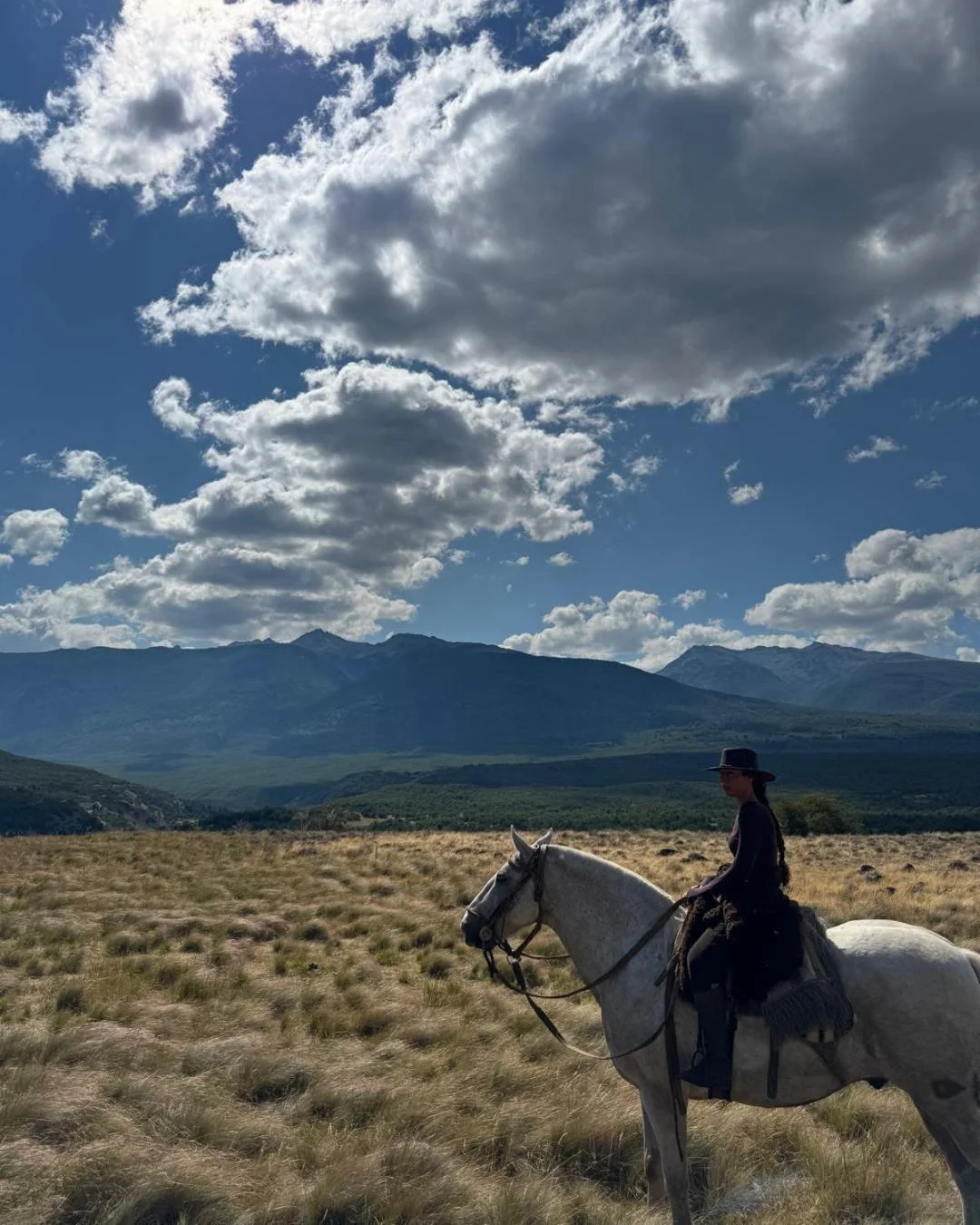
Day two, we moved on to our next estancia. Nine-plus hours of bushwhacking through a massive variety of terrain: deep mud and lush grass, lovely forests, thick brush, wide open spaces, gorgeous rivers you can drink from.
Between the sucking mud and rocky scrambles, my horse, now Torrito (means “Torrito,” sadly no deeper meaning or relation to a fine Italian liqueur), lost a shoe (as did the horse of one of our guides, the lovely Carmen, of Barcelona). It didn’t matter. Manu eventually disappeared and magically reappeared 30 minutes later with farrier tools and new shoes. Problem solved.
After following the beautiful Hielo river for several more kilometers, we arrived at a brand-new off grid lodge at the end of the main “road” (I use that term very loosely) on the river, apparently a premier fly-fishing destination. We were simply content to soak in the view, the quiet, the sunset and the stars. The food was incredible. Sleep was instant.
Secret River Spot and Prickers in Your Socks
Day three: a morning ride after a late but fabulous breakfast (with coffee and hot milk!) to a secret river spot with beautiful waterfalls and a crystal-clear lagoon. Some attempted swimming with the horses. Some stayed on. Some did not but maintained their dignity in a slow slide into the water. Our gauchos prepared riverside charcuterie and homemade salads and as always, local red wine. A long nap followed.
Also newly discovered that day, in this part of Patagonia, every plant has prickers. They are everywhere. They attach to everything. Saddle sheepskin, socks, dignity, whatever. Some were gentle, others not so much. Several different kinds made it home with me, prompting questions from my husband as he sorted the laundry. I pled ignorance.
Back at the lodge: Aperol spritzes on the deck, sublime sunset over the river, another fine dinner, excellent sleep.
Fly Camp on the Hielo River
Day four: After yet another delicious breakfast, we rode on to the fly camp on the Hielo River, deep in a Protected Area of Patagonia and well off the tourist track. Few people other than our local guide Ivan and his father, “El Gringo” Austin, who live and work cattle in the area, have ventured this far.
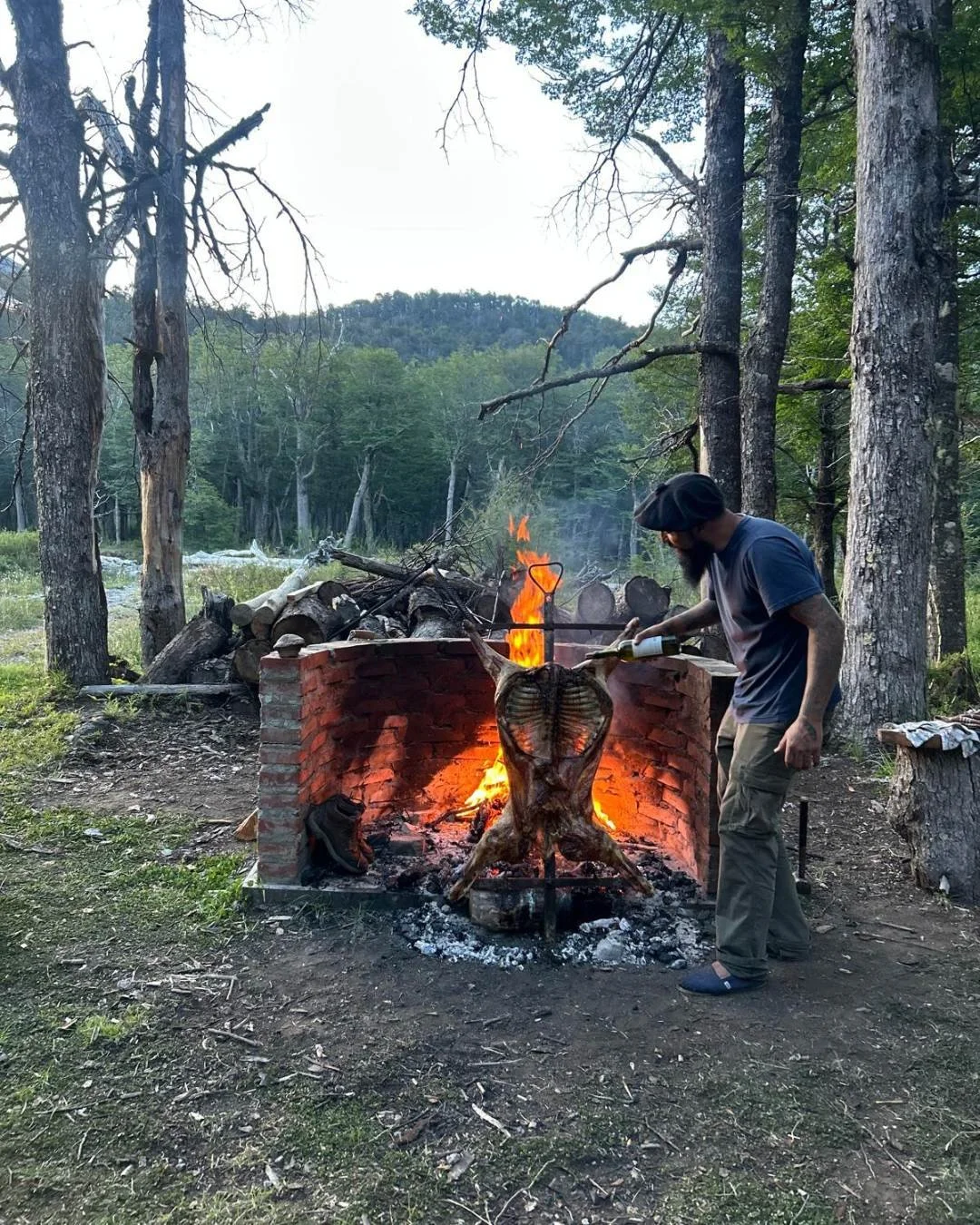
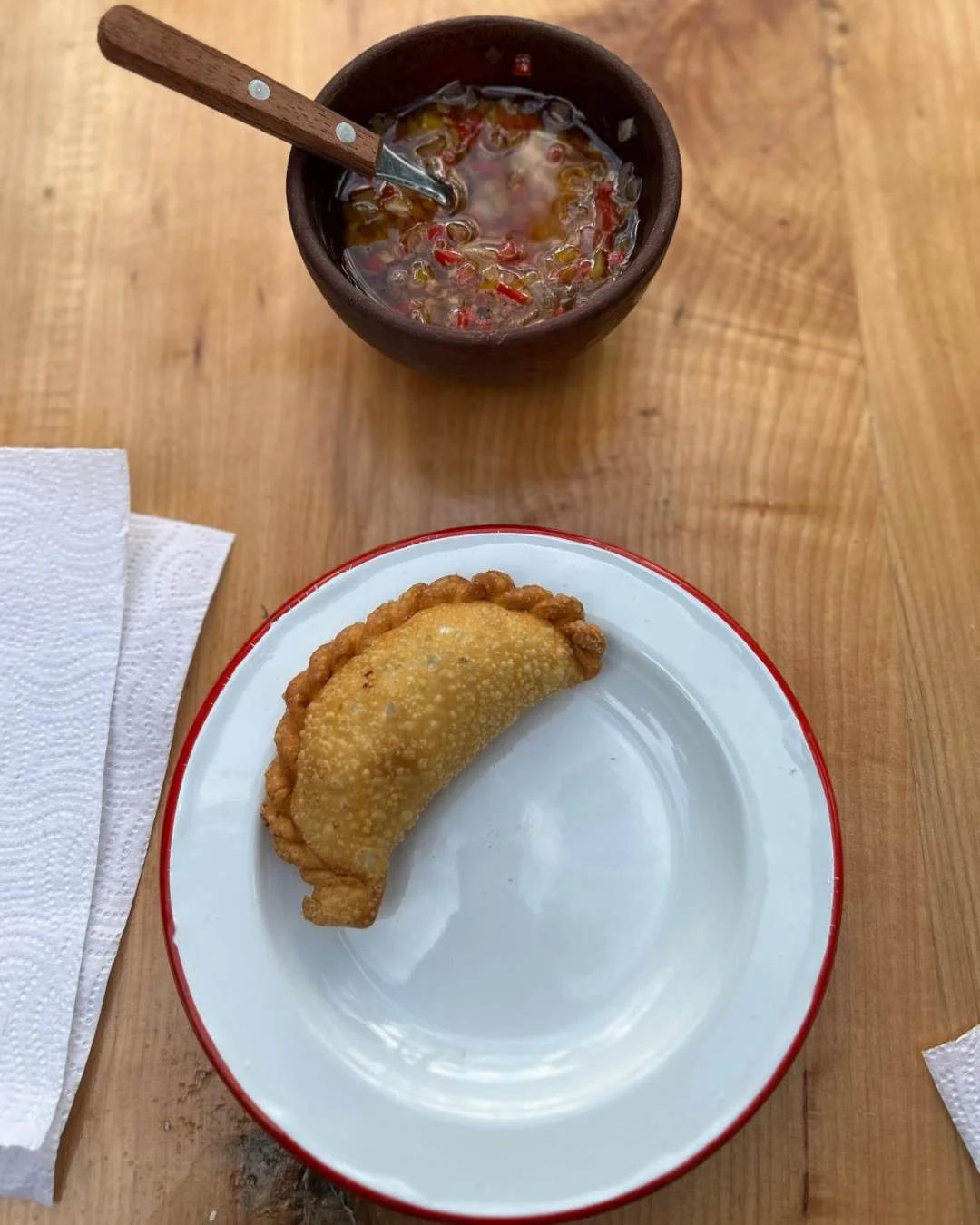
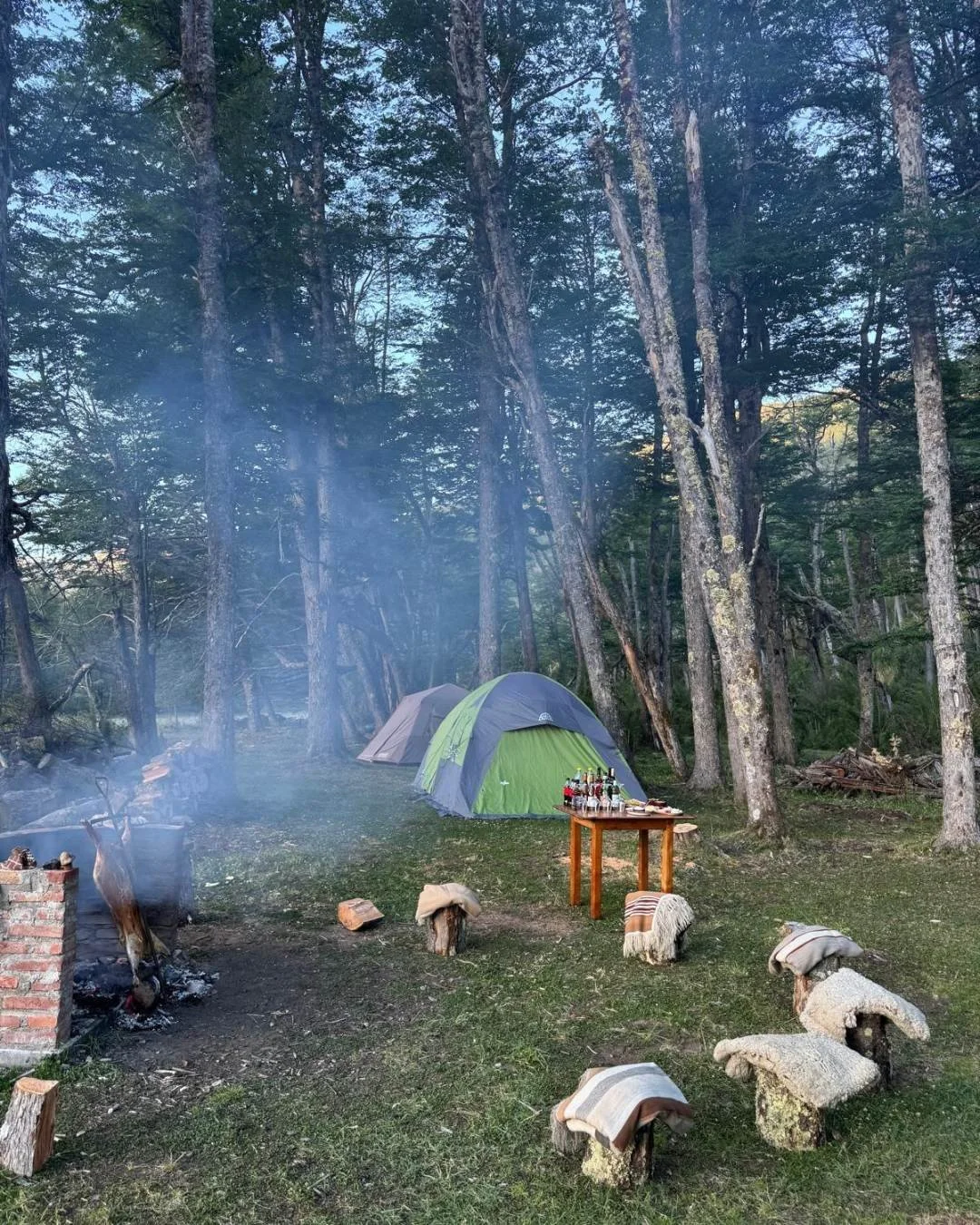
The fly camp was unexpectedly luxurious: generous tents, camp cots with sleeping bags, hot showers, and a small cabin for cooking and sheltering from the rain at meals. There was a generous fire pit for the most amazing Patagonian cooking - fried empanadas, asado, ribs. The food prepared over the fire was integral to the entire trip, an event every night, always abundant and always delicious.
They say Argentina is a carnivorous country, and of course it is, but we also enjoyed an abundance of fresh fruit, roasted vegetables, salads and vegetarian soups. David, our energetic chef, also shared the most amazing homemade calafate jam and calafate vinegar (for salads). Calafate is a small purple berry native to Patagonia, particularly abundant in southern Patagonia, including El Calafate, deep in southern Patagonia, where David lives, and which town is of course named for the calafate berry. I managed to find, pick and eat one during our ride (I swear!), and thus am destined to return to Patagonia, according to local legend: “El que come calafate, siempre vuelve" - "Whoever eats calafate will always return to Patagonia.”
Hard duty, but someone must carry the burden of coming back to this vast, beautiful, wildly restful place.
The Longest Ride: Twelve Hours to Hielo Glacier
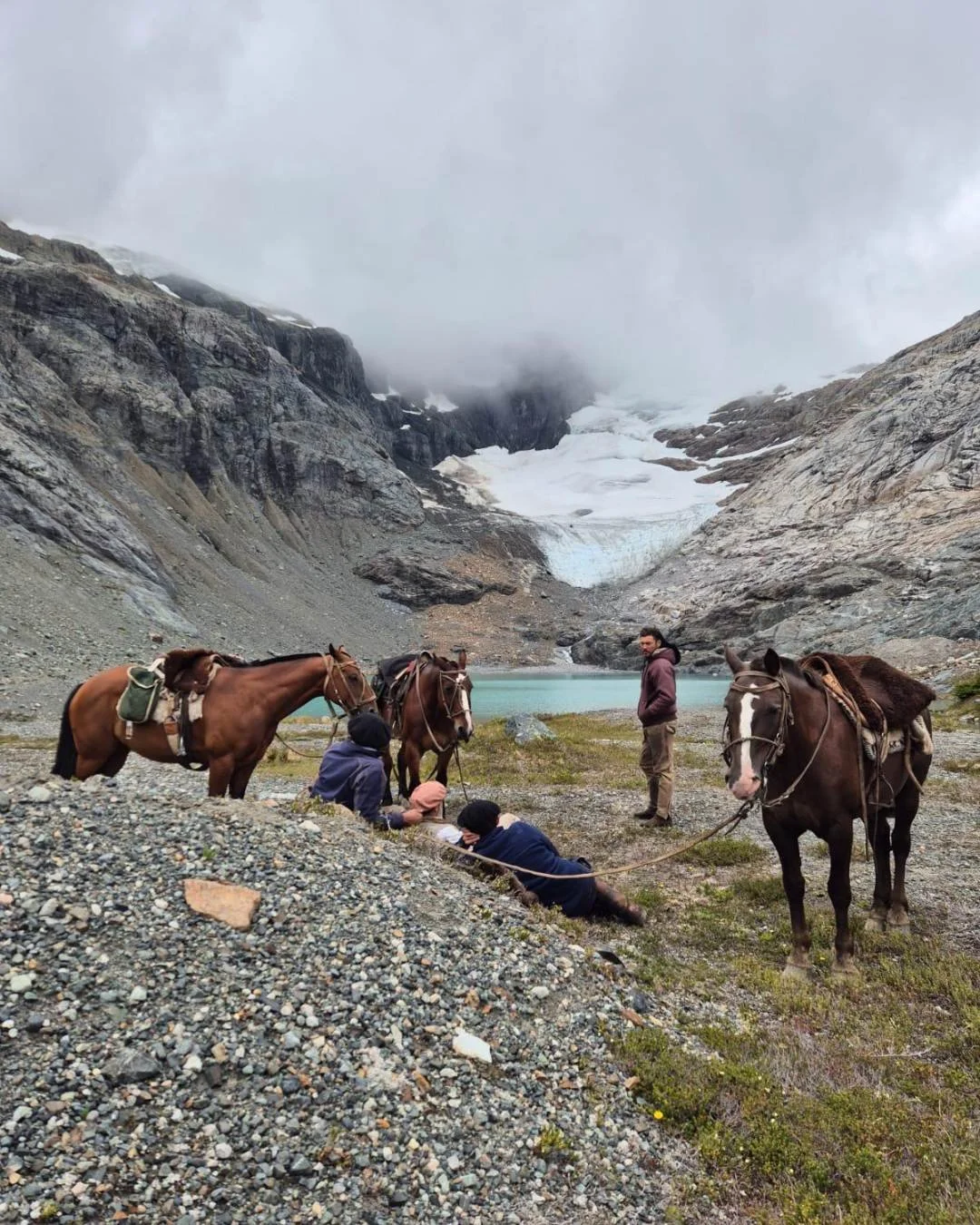
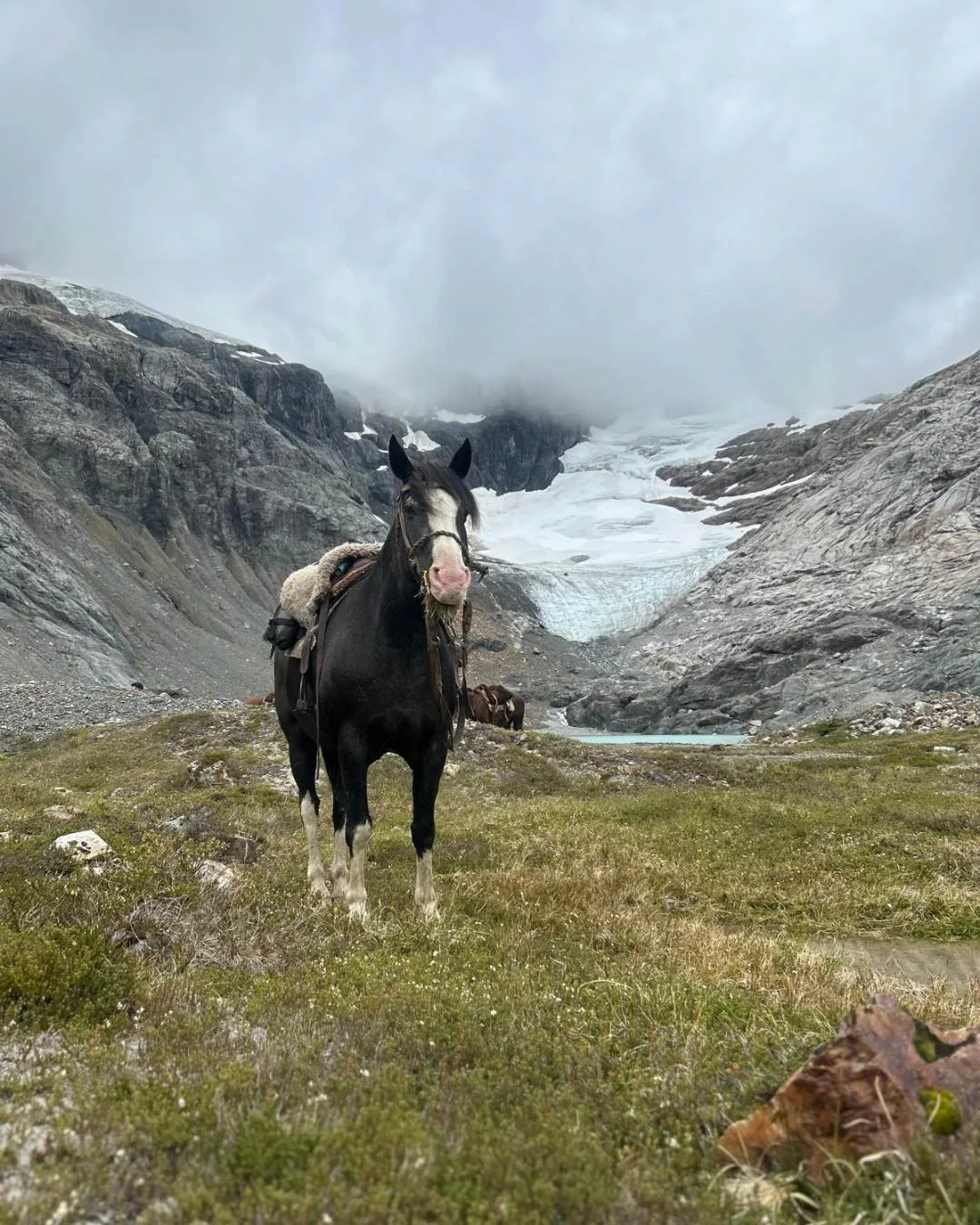
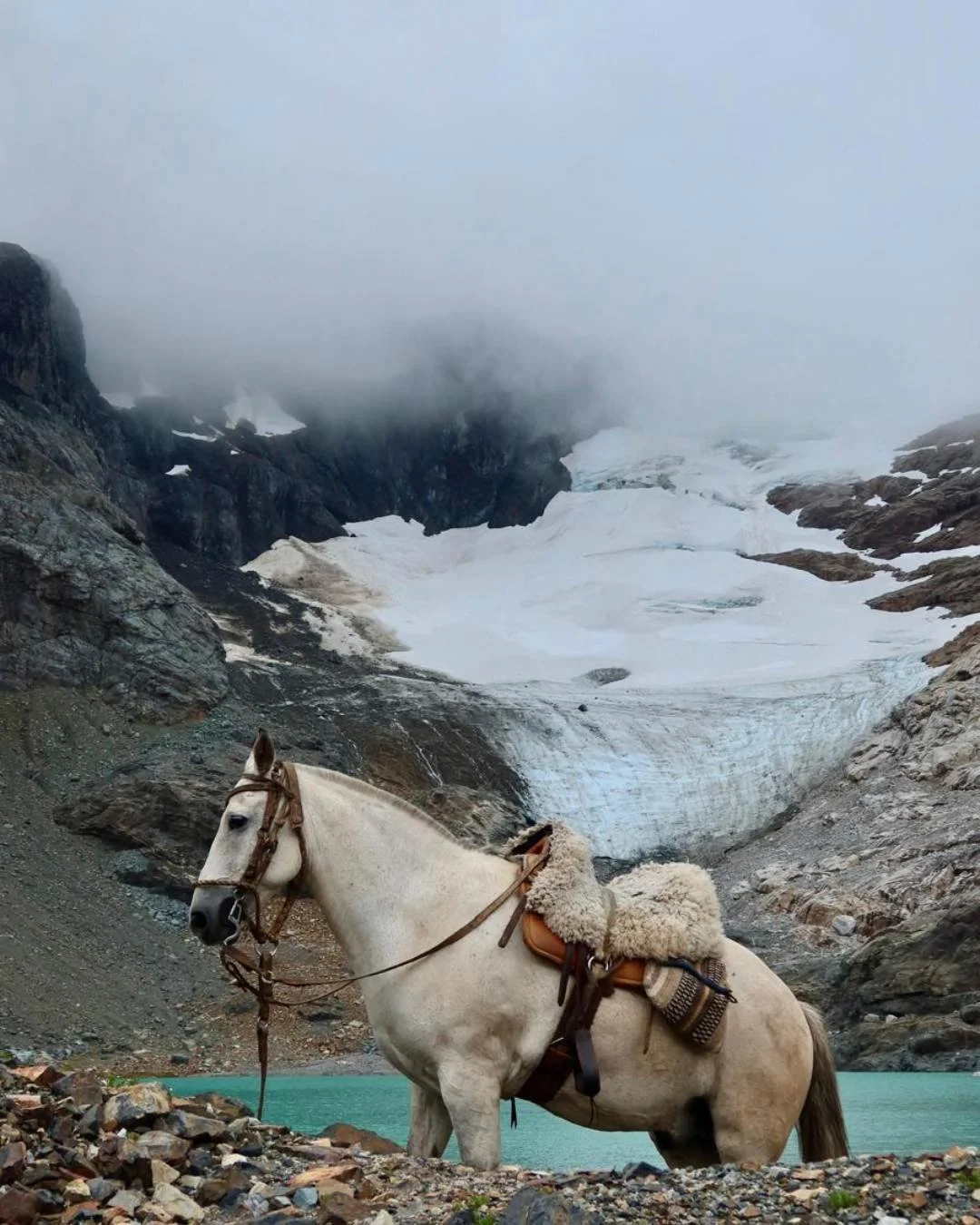
Day five: We took advantage of good weather and set off on the most ambitious ride of the trip: twelve hours round trip to the Hielo Glacier, rarely visited except by Ivan, our gauchos and their guests. It really did not feel like twelve hours. You don’t see another soul other than your group, the quiet is stunning. At the glacier, taking in the immense and gorgeous views, I filled my bottle with the most refreshing water I've ever tasted at the base of the glacier. Seriously.
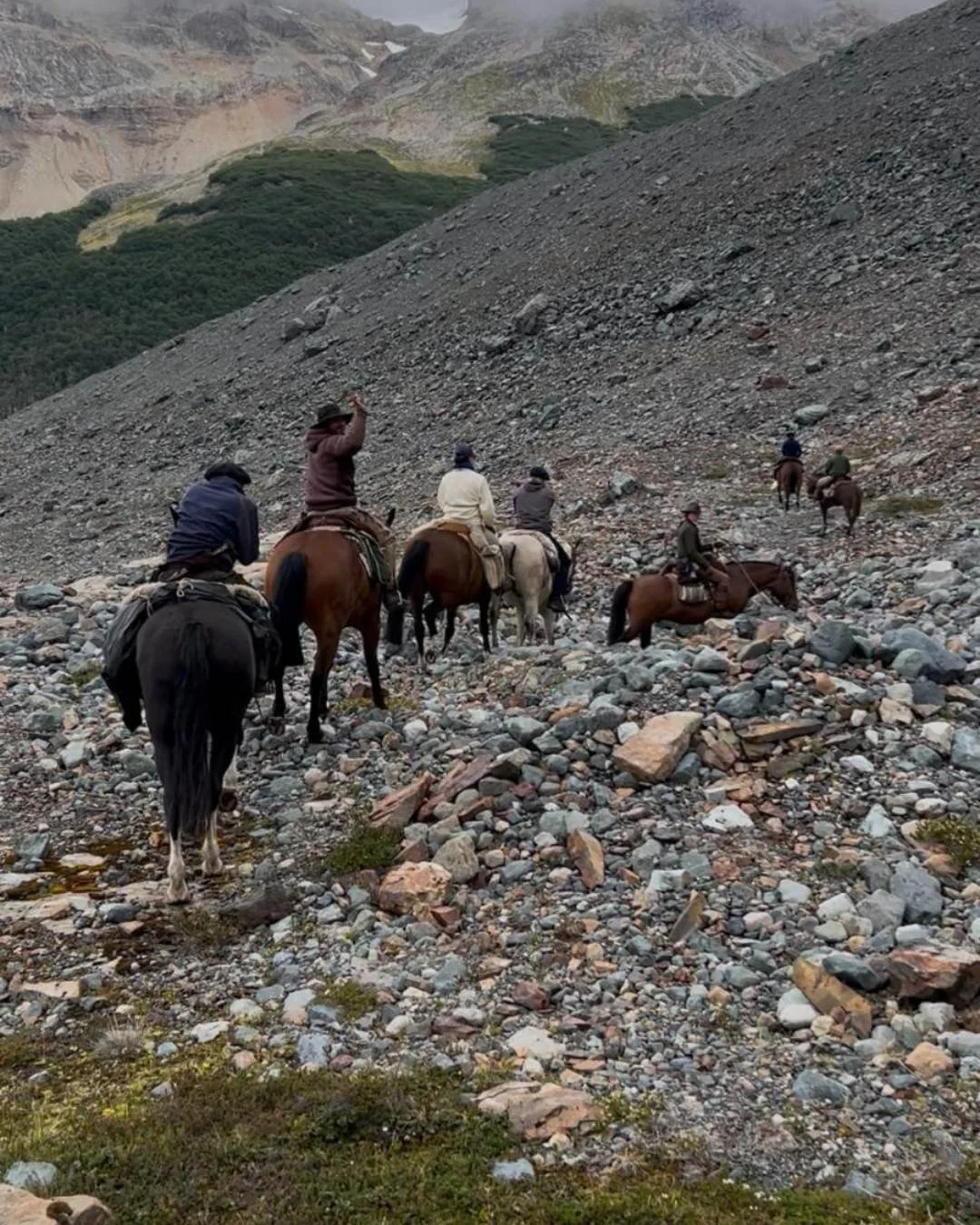
What we really learned that day: These horses are unbelievable climbers. Powering up ridiculously steep slopes, over and over and over again. Sliding back down, sideways and across impossible pitches. Crossing and recrossing the river, multiple times. Cantering back into camp at the end of the day as if no climb had ever happened. They are unreal athletes. Just beware the jaketa!
Final Day: Rain, Cards, Wine, and Regret (?)
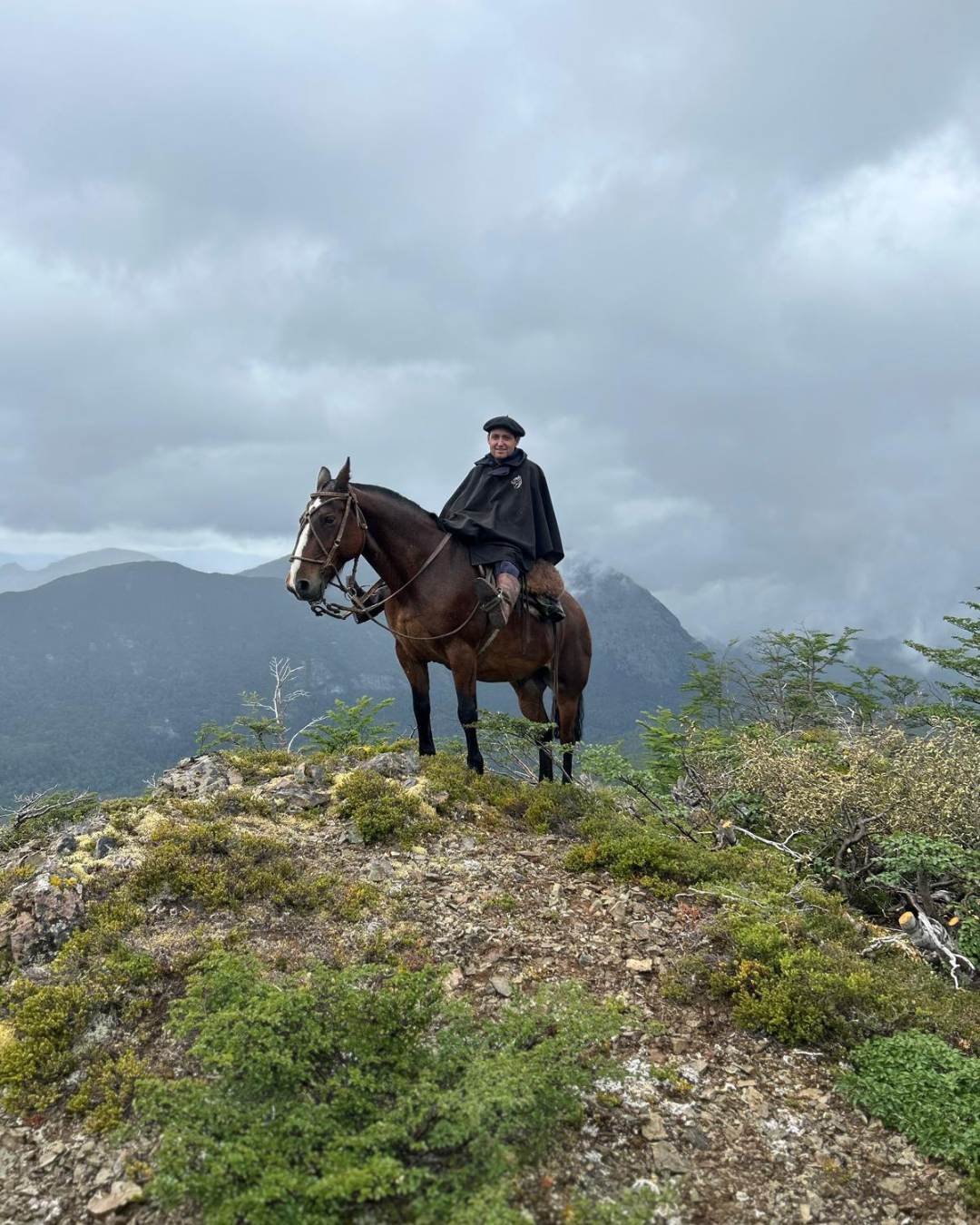
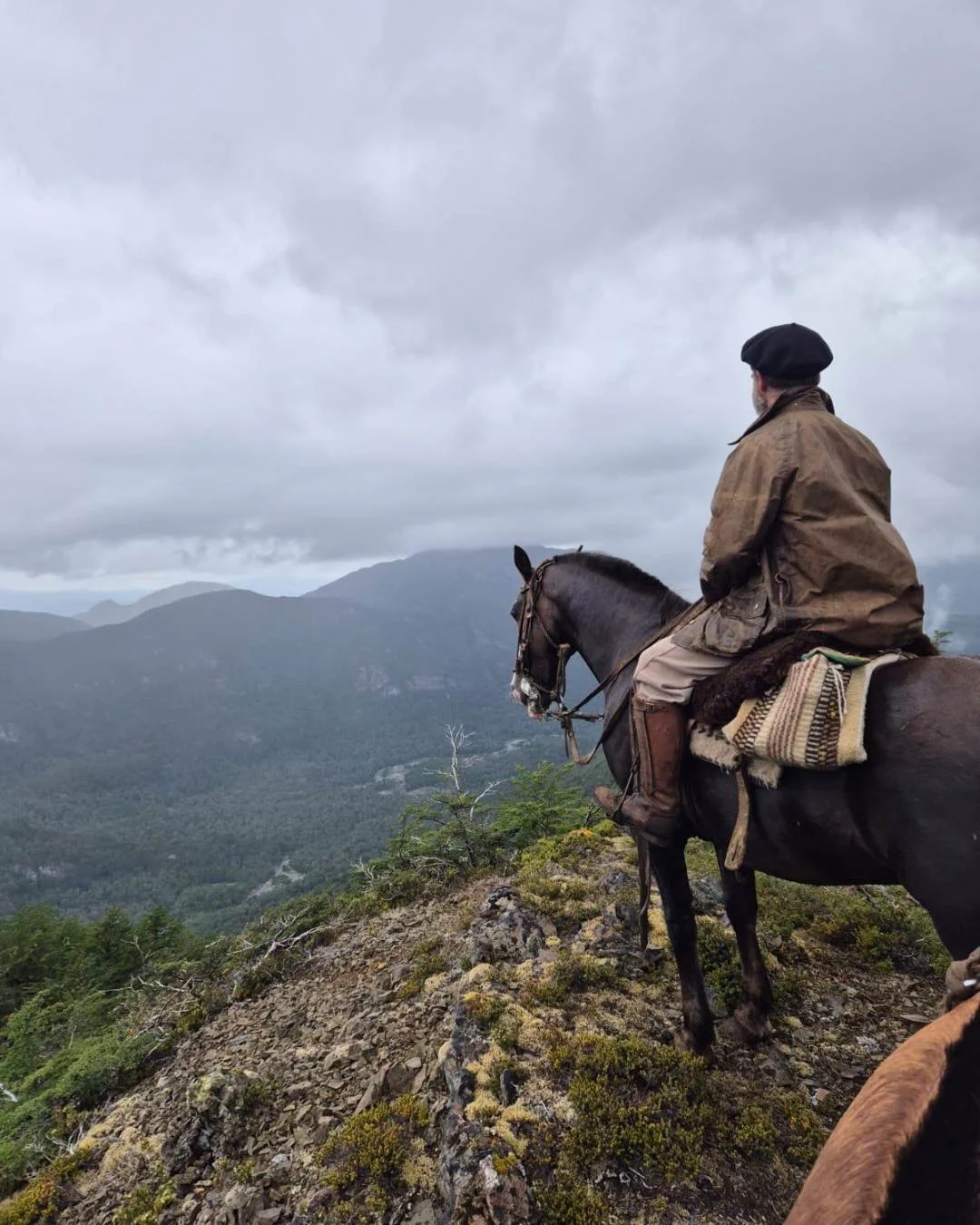
Our final day brought another attempted climb for valley views, and what we could see was lovely (although too cloudy/wet for condor viewing), but the rain chased us from our lunch spot back to camp for a quiet afternoon.
Until the playing cards came out. Then the wine. Then appetizers. Then dinner. Then the guitars, portable speaker, music and dancing. Then the whiskey. Then 2 am (I didn’t quite make it that far). The nine am ride back to the airport the next morning was perhaps quieter than usual. But there were no regrets. Particularly as we were reunited with Federico and Destroyer and enjoyed a surprisingly tasty and abundant lunch of Argentine specialties at a local cafeteria in Esquel.
At the airport, as the mass of people crammed into the tiny gate area were jostling to board, I, ever the rule-follower, asked a nice couple which priority line they were in (in my impeccable Spanish, my question came out as “uno, due?”), and the woman responded, in English, “It doesn’t matter, this is Argentina.” And she laughed. Of course it didn’t matter. We’d all get where we were going, eventually. And so we did.
A Note on Buenos Aires (from someone who barely spent any time there)
Buenos Aires is a huge, vibrant city. Not really walkable, but relatively easy to get around and through with Uber (advertised on every seat back on a domestic Argentine flight) or the free tourist buses that circulate popular areas throughout the city. Most Argentine safaris require at least a night in Buenos Aires on one or both ends of your trip, as international flights generally arrive at Ministro Pistarini International Airport (EZE), south of the city, and most domestic flights depart to and from Jorge Newbery Airport (AEP), near the city center. If traffic is heavy, it can take two hours, or more, to travel from one airport to the other. Domestic flight times in Argentina are also impressive. Our fight to Esquel, from AEP, lasted close to two and half hours. Argentina, and more particularly Patagonia, is quite grand, the scale is astonishing. Plan accordingly!
I was only able to spend a day in Buenos Aires on the back end of my trip, and as I was feeling lazy and overwhelmed by choice, chose a hotel at random that was close to the domestic airport (AEP). It so happened my hotel was within walking distance of the Argentine horse safari shopping mecca, Arandu. Which also caters to polo enthusiasts, actual gauchos, aspiring gauchos, equestrians of any kind, and just persons of good fashion sense and substantial means. The store exudes leather, luxury, beauty, and fine craftsmanship, and is a must visit destination for anyone traveling to Argentina to ride a horse.
One of the most affordable items in the shop are the distinctive alpargatas (also called espadrilles), offered in an array of styles, sizes and colors. Alpargatas are traditional Argentine canvas shoes with a distinctive rope or jute sole (or rubber). On warm, dry days, you will see your gaucho wearing, and riding in, these remarkably comfortable, breathable and light slip-on shoes. They are also ubiquitous at the end of the day when boots are no longer needed. At around $13 a pair, you can stock up! They weigh almost nothing and take up very little space in your luggage.
I felt ever so Argentine when I purchased a pair (correctly sized with the help of the charming staff), because I had failed to pack a comfortable pair of warm weather shoes, but pro tip, soon learned they are not meant for extensive city walking. My one consolation was that people spoke to me first in Spanish, before switching to English (or just looking sadly at me) when they realized I understood nothing they were saying and (probably) that no self-respecting Argentine would have the poor judgement to pound the streets of Buenos Aires for any length of time in alpargatas. Nevertheless, I stand by my purchase, which carried me on my search for empanadas, and I cannot wait to wear them once summer arrives in Minnesota.
(Fun fact: It is estimated that as many as 60 to 65% of Argentines have some Italian ancestry. Argentina also has one of the largest Italian diasporas in the world. Perhaps one of the reasons the coffee is so good, every bathroom has a bidet and every hotel mini bar, a little bottle of Fernet and a can of Coke. Ok I don’t know if the last is actually true, I just want it to be. Pizza is everywhere, albeit with some strange toppings.)
One other stop on my rapid tour of BA, a fine cup of cappuccino and pastry at the Teatro Colón café. I had no patience (or time) to wait in line for a guided tour of what I have been told is truly a stunning building, one of the great theaters of the world. The polo grounds at Campo Argentino de Polo in the Palermo neighborhood are also on many Buenos Aires itineraries, given Argentina’s rich polo culture. Perhaps next time I’ll make it to a match!
I was sad to learn that the Buenos Aires restaurant of the legendary Argentine chef, Frances Mallmann, closed during the pandemic. He is credited with elevating Patagonian open-fire cooking techniques to an art. However, since I am sure to return (so says the berry), perhaps I’ll make it to Mendoza to his restaurant, Siete Fuegos, or pop up to Uruguay (closer to BA) to visit Garzón. Before or after a trip to Patagonia, the Frances Mallman episode on “Mind of a Chef” (simply called “Argentina”) is well worth watching to appreciate the very strange and special place that is Patagonia, Argentina, and the food and people you’ll find there.
Meet Ride & Explore — Panchi Bonadeo, engineer and gaucho extraordinaire
Ride & Explore launched its first expedition in the 2023-2024 season. One pilot group, one test run. Spectacular. They haven't stopped since.
The name came from Marcos Villamil and Nico Fliess, and it says everything. Since day one the team has been scouting new routes, pushing further, chasing better viewpoints. Panchi was already running pack trips in the Trevelin area when Marcos passed through mid-journey across Argentina. One meeting at Nico's place and it was decided. Friends first, team second, benchmark third.
The horses are purebred Argentine Criollos or Criollo crosses, born and raised in the Andes. When they are not on expedition they are working cattle at the ranch. Nutrition and rest are prioritised year-round because the terrain demands it and the horses have earned it.
Food is taken seriously. Chef David consults every guest on dietary preferences and builds a menu around Argentine tradition. He came via Córdoba, El Calafate and eventually fly fishing, which is how most good things in Patagonia find their way to where they belong.
If you want to meet someone truly of the land, that is "El Gringo" Austin. Born and raised in the exact corner of the world where you will ride. He and his son Ivan are calm, quietly capable people until the moment they are not, and in an instant you might find them at full gallop chasing a wild bull through dense mountain forest like it is a perfectly normal Tuesday. Because for them, it is.
Ivan has been the team's baqueano, expert scout and guide since the beginning. He and his father were the ones who first showed these trails to anyone. They know this terrain better than the terrain knows itself.
A fun fact from Panchi: cattle in the harder-to-reach parts of the Andes sometimes escape so deep into the mountains they cross into Chile and go completely feral. The wild bulls start leading domestic cows away from the herds. Managing them is just part of daily life for gauchos like Ivan and his father. Normal Tuesday, remember.
That is the whole point of Ride & Explore. Not a tour. Not a package. A week living like a Patagonian gaucho, with the people who actually are one.
FEATURED ARTICLES
⭑
MUST READ
⭑
FEATURED ARTICLES ⭑ MUST READ ⭑
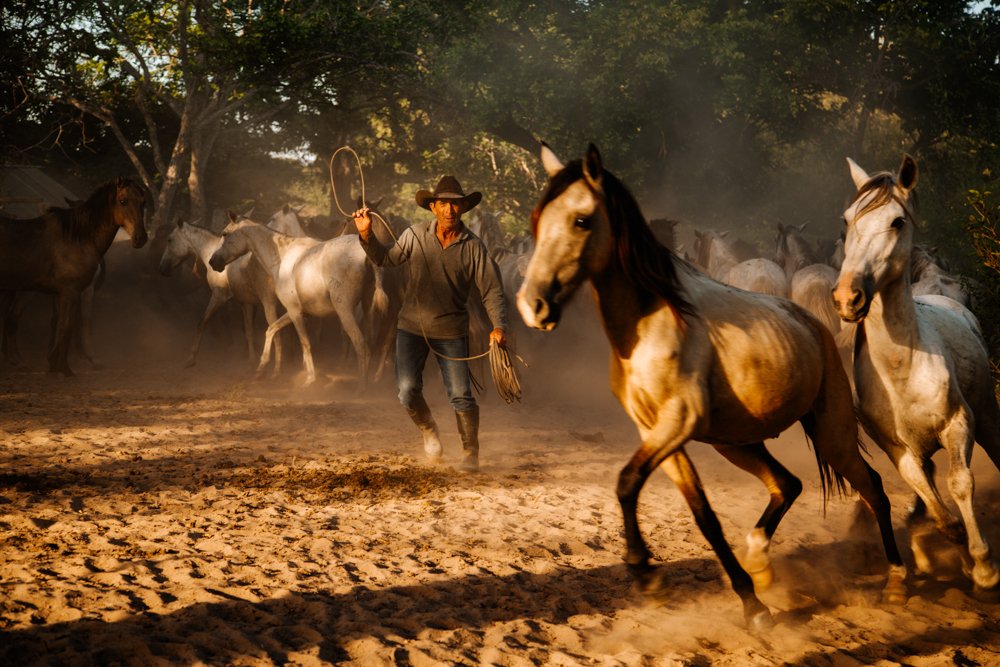
Barefoot in the Llanos: Inside Colombia’s Wildest Working Ranch
Riding barefoot through the wild heart of the Llanos to discover a ranch where the old ways aren’t history, they’re still a way of life.
Five Reasons Zambian Horseback Safaris Belong on Your Bucket List
Discover why Zambia’s untouched wilderness, intimate camps, and soul-stirring horseback adventures make it the ultimate destination for riders seeking something truly extraordinary.
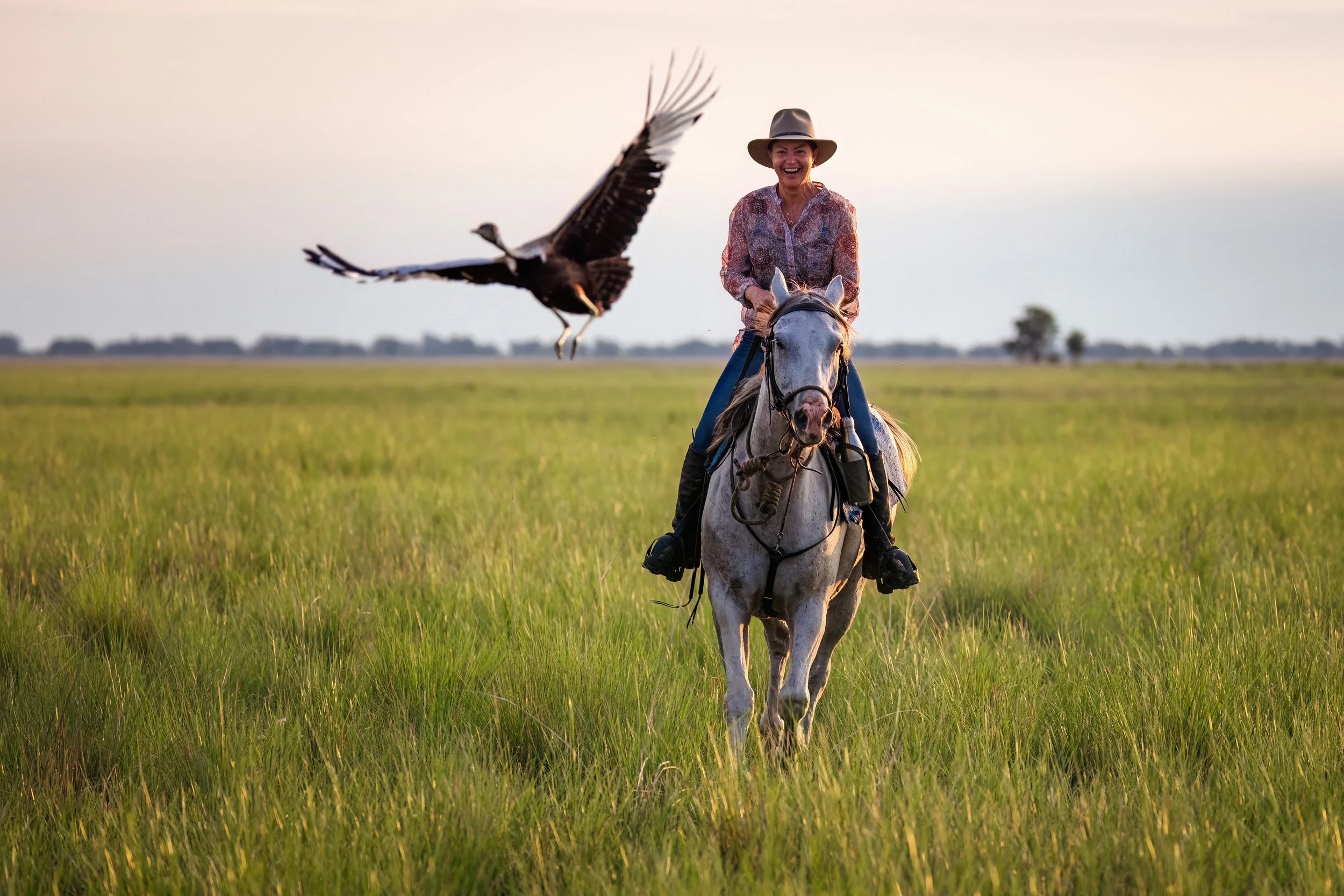
The truth is, we buggered it up. Namibia Horse Safaris ruined everything. Goddammit, it was just too good.
This was one of our first rides early on in our Bad Pony adventures. Now every ride is immediately compared to this epic adventure.